
FocuX
Your devices don't know how you feel.
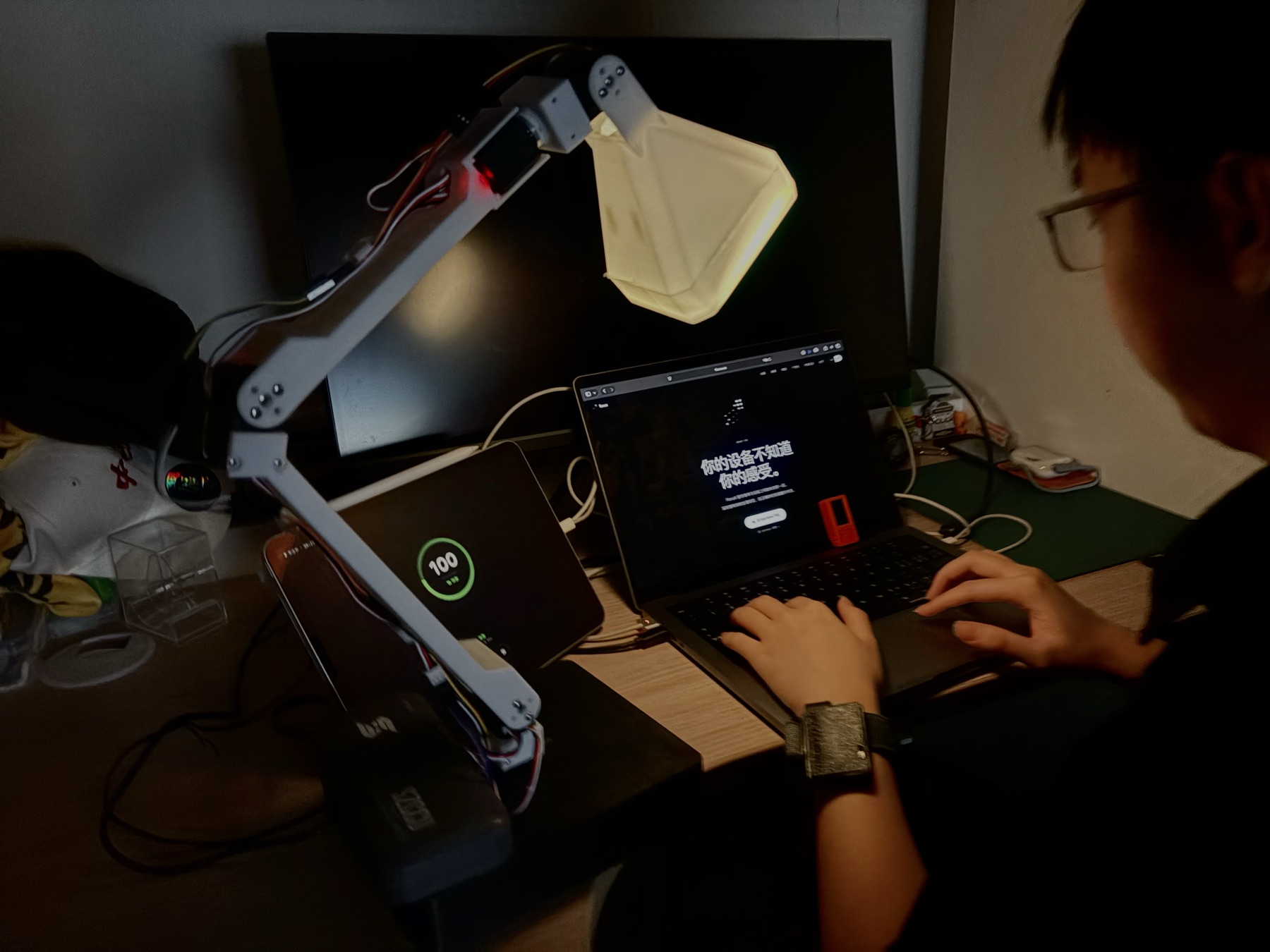
Digital nomads gain freedom but lose the boundaries once supplied by offices, commutes, and colleagues. Task managers say what to do, health trackers summarize the past, and fixed reminders interrupt at the wrong moment. FocuX fills the missing layer: it understands how work is going right now, then chooses the least disruptive way to help—from staying silent, to a light nudge, to LeLamp moving or changing light. It does not decide when someone should stop; it helps them notice their own state sooner.
- Not another timer: FocuX learns each person's working rhythm instead of forcing everyone into the same schedule or threshold.
- A polite intervention curve: stay silent first, nudge only when a pattern persists, and let LeLamp enter the room only when the moment is worth interrupting.
- An early paired test suggests the assisted workflow reached an effective path sooner and concentrated the remaining risk at one moment worth helping—directional evidence for better timing, not more reminders.

Loop「我在」
不是让 Ta 继续活在机器里,而是让 Ta 留给你的那部分,继续活在你身上。
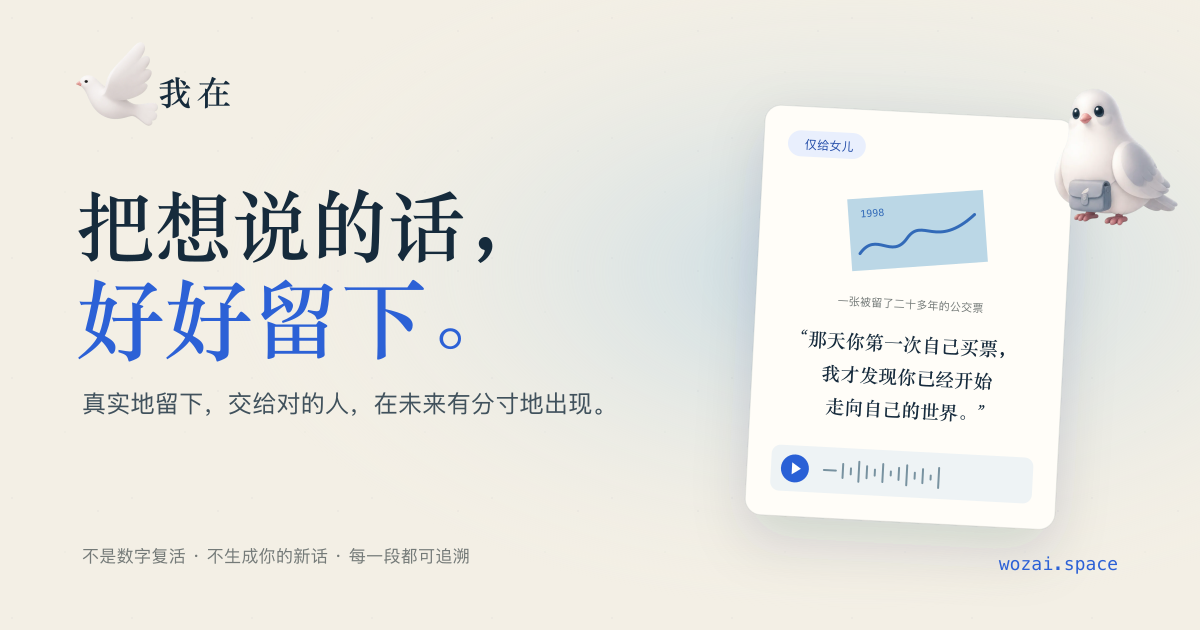
Loop「我在」是一套以真实生命记录、关系授权与实体托付为核心的生命叙事和代际传承系统。在本人仍能亲自表达时,用原声、照片、文字与物件故事留下真实内容,再决定“什么代表我、留给谁、未来如何出现”。
- 真实来源:原声、原图、原文和原始时间始终保留;AI 整理与本人原话分层,可审核、可拒绝。
- 关系授权:按“每段内容 × 每段关系”逐段设置;接收者主动进入,并始终拥有减轻、隐藏、暂停或关闭的权利。
- 克制的 AI:只在本人确认且授权的素材中检索和关联;证据不足时保持沉默,不模拟人格,不创造新记忆、新承诺或新意志。
- 实体托付:戒指是记录、托付与未来主动开启的关系信物,不是情绪诊断设备。

Broaden 博听
The world's first sign language museum guide.
Broaden is the world's first museum guide that speaks sign language, not subtitles. Here's the problem museums ignore: for 27.8 million deaf people in China, sign language is their first language—text is a second language. Yet museums proudly display "accessible" text walls, missing the point entirely. The result? 39.81% have never visited. Not because they can't enter, but because they can't connect. Broaden solves this with a deep integration of AI exhibit recognition and real-time sign language avatars—a world-first approach. Point your phone at any artifact: the system identifies it instantly, and a digital signer appears, telling its story in fluent sign language with genuine emotional expression. Ask questions; the answers come back signed. This isn't "adding subtitles to existing content." This is building sign language into the core experience. Currently in open beta—download via TestFlight. Seed funding commitment from Tencent Foundation.
- World's first deep integration: AI exhibit recognition + real-time sign language avatar in one seamless flow.
- Dual-step capture system: scan the exhibit label to identify, then point at the artifact—no QR codes, no pre-recorded videos, no friction.
- iOS Vision Framework powers subject extraction that isolates artifacts like "peeling off a sticker"—generating shareable transparent PNGs.
- Multi-turn AI Q&A outputs in sign language—visitors can dig deeper into whatever fascinates them, continuously.
DreamEcho
Most dreams fade. Some matter.
DreamEcho posits: If dreams were preserved as assets, what would change? It invites you to record dreams in the first person, using AI to extract emotions and symbols, generating a unique 3D "dream object." This object shuttles between your phone, Vision Pro, and 3D printed reality. Using NFC and blockchain, it adds a layer of "digital ownership," ensuring this experience retains a certificate of existence even after the App disappears.
- Transforms dreams from "weird stories" into transferable, giftable emotional entities.
- Through 3D printing and NFC, a private nightscape can be held in hand or awakened by others.
- NFTs are not for hype, but to provide platform-independent proof of "I own this experience."
Limo Living Tank
One life, rooted in water and extended into pixels.
Limo is an interactive bio-tank built around the Japanese marimo as a living character IP. Gesture sensing, light, and subtle physical motion let the marimo respond to people nearby, while its digital counterpart carries the same state, personality, and shared history into the app. Together they form one life across water and screen—a symbiosis between a real living ecosystem and a virtual companion. The project progressed from a hackathon prototype through successful crowdfunding and continued product evolution; I contributed during its formative phase and have since exited.
- The Japanese marimo is the living character at the center of the interactive ecosystem.
- Gestures, light, and slow physical motion give the marimo an expressive presence in the room.
- The app extends the same life into a digital counterpart, connecting state, memory, and interaction across tank and screen.
- Completed crowdfunding and continued evolving beyond the original prototype; I have exited and am no longer involved in current operations.
W「N」ERE
A phone that refuses to stay in your pocket.
The back of a Nothing phone is already a performance; W「N」ERE simply performs one action: lifting it out. A 3D-printed case and fabric cable hang the phone on your chest, tilted slightly forward. A small on-device model peeks at your environment periodically, compressing those moments into a string of Emojis and Glyph light effects—not to "understand your life," but to compress the day's fragments into a scented trail in an extremely restrained way.
- Lets the transparent back actually stay in the air, not hidden in pockets or on desks.
- On-device model takes coarse "30-second glimpses," narrating the day via Emoji and light rhythms.
- A question: When the phone sees more than you, what should it say on your chest to remain intrusive?

SNAKE1
The real world wakes the Agent. The Agent comes back to help.
SNAKE1 is an active personal Agent that can be awakened without opening a screen. A ring, glasses, or earbuds provide low-friction triggers and private feedback; the Agent understands the moment, checks permission boundaries, then acts through iMessage, a delayed rescue call, or a Unitree Go2 robotic dog.
- A ring, Even glasses, and earbuds turn gestures, touch, and short voice windows into discreet triggers and private feedback.
- The Agent combines the current event, short-term context, and user presets, then checks consent, cancellation, and safety boundaries before acting.
- Photon/Spectrum closes the software loop through iMessage and delayed rescue calls—even when no robot is present.
- Unitree Go2 extends the Agent into the room: with a person confirming physical actions, it can approach, greet the user, and create a natural exit from an awkward interaction.
RealityBadge
Most breaks never happen.
RealityBadge is designed for those "trapped in the cubicle." When you sit for too long or the weather shifts, it doesn't give you a to-do list, but a specific invitation to leave your chair. It might ask you to look at a tree downstairs, reach for the sky on the balcony, or check a water meter in the corner. Upon completion, align your phone with the scene: the hand, the tree, the meter must appear together. The system then uses depth and parallax to mint this moment into a 3D badge, pinning it to your "Escaped the Cubicle" wall.
- Task system based on "leaving the chair," rewarding spatial displacement, not steps.
- Uses iOS depth & motion perception to turn fleeting escapes into collectible 3D badges.
- A stamp collection of moments, recording not tourist spots, but specific instants of escape.

Orago
Numbers don't heal. Rituals do.
Orago began as Photonic Nose—a lab-grade breath sensing exploration asking a blunt question: what if a glucose check could be replaced by a single breath? But the deeper problem surfaced fast: the more people stare at health metrics, the less they act. So I rebuilt the project as a calm pregnancy wellness system—part living object, part lightweight app—designed to turn anxiety into small, repeatable care rhythms. This iteration is independently designed and developed end-to-end.
- Reframes monitoring into a plant-powered companion: growth is felt over time, not judged by spikes.
- A widget-first, modular card UI that favors "next doable step" over dense dashboards.
- Keeps claims honest: trend-level support, not clinical diagnosis—built for long-term adherence.
Melink
Meetings end. The fog stays.
Melink wants to turn a spoken sentence into a clear bullet point on everyone's phone within seconds. Small hardware on the table listens quietly, while the cloud transcribes and distills in real-time. Attendees simply scan a code to get a meeting summary tailored to their perspective, rather than a full recording 2 hours later. During open testing at a hackathon, 90% of people rushed the system, crashing the temporary server—its first and most intuitive "usability test."
- Moves "post-meeting organization" to "during-meeting," reducing the fog of forgetting.
- Minimal interface and fixed entry let AI recede to the background, appearing only when needed.
- Development stopped after the hackathon; the project remains as a record of a real-time meeting collaboration prototype and its live test.
Silver Ant
Robots amongst us.
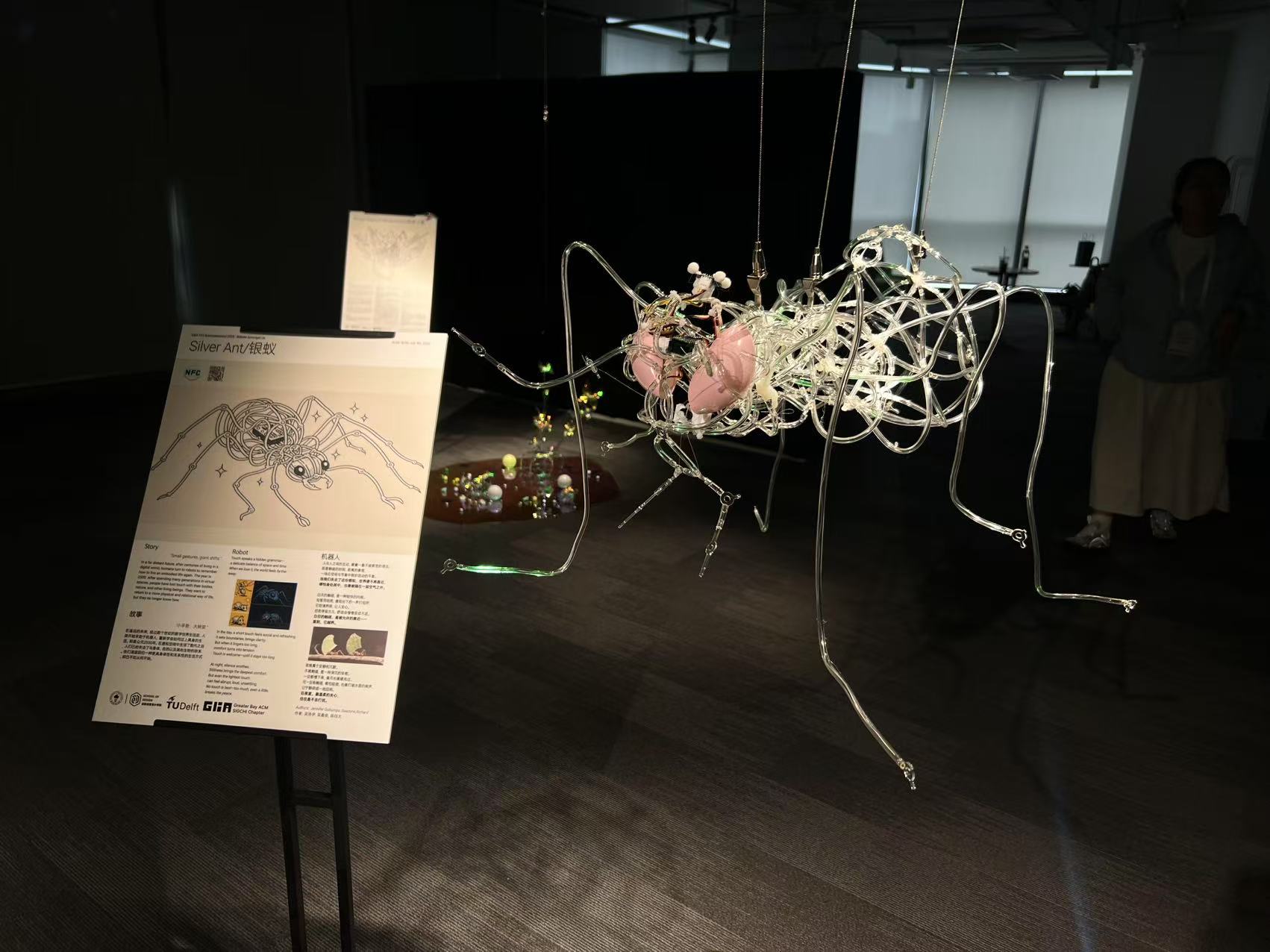
Silver Ant is not a robot for service, but a species that preserves tactile language after the apocalypse. Set in a distant future where humans have spent centuries in the virtual world, forgetting how to touch. Silver Ant appears as a mechanized colony beacon, wrapped in wires and sensors. Through distinct tactile feedback for day and night, it reteaches humans: where is a greeting, where is a pause, and where distance must be kept.
- Daytime: Brief touches translate into clear, gentle movements and light—reformatting social boundaries.
- Nighttime: The system amplifies silence; excess touch is "rejected," respecting rest.
- A More-Than-Human metaphor: perhaps non-human life will help us remember how to be with the world.